01 — THE SCIENCE
Hydrogels: Water-Based
Polymer Networks
A hydrogel is a three-dimensional network of hydrophilic (water-loving) polymer chains that can absorb and retain large amounts of water — typically between 70% and 99% of their total weight — while maintaining a solid or semi-solid structure. The polymer network is held together by physical or chemical cross-links that prevent the material from dissolving despite its high water content.
This unique combination of properties — high water content, softness, flexibility, and biocompatibility — makes hydrogels remarkably similar to biological tissues. The human body itself is largely composed of hydrogel-like structures: cartilage, the vitreous humor of the eye, and the extracellular matrix all share structural similarities with synthetic hydrogels.
Hydrogels are used across a wide range of industries: agriculture (soil moisture retention), contact lenses, drug delivery systems, tissue engineering scaffolds, and — most relevantly for consumers — wound care dressings.

02 — MARKET ANALYSIS
Why Wound Care is Hydrogel's
Dominant Consumer Niche
The global hydrogel dressing market, growing at ~4.3% CAGR through 2030, driven by chronic wound prevalence and aging populations.
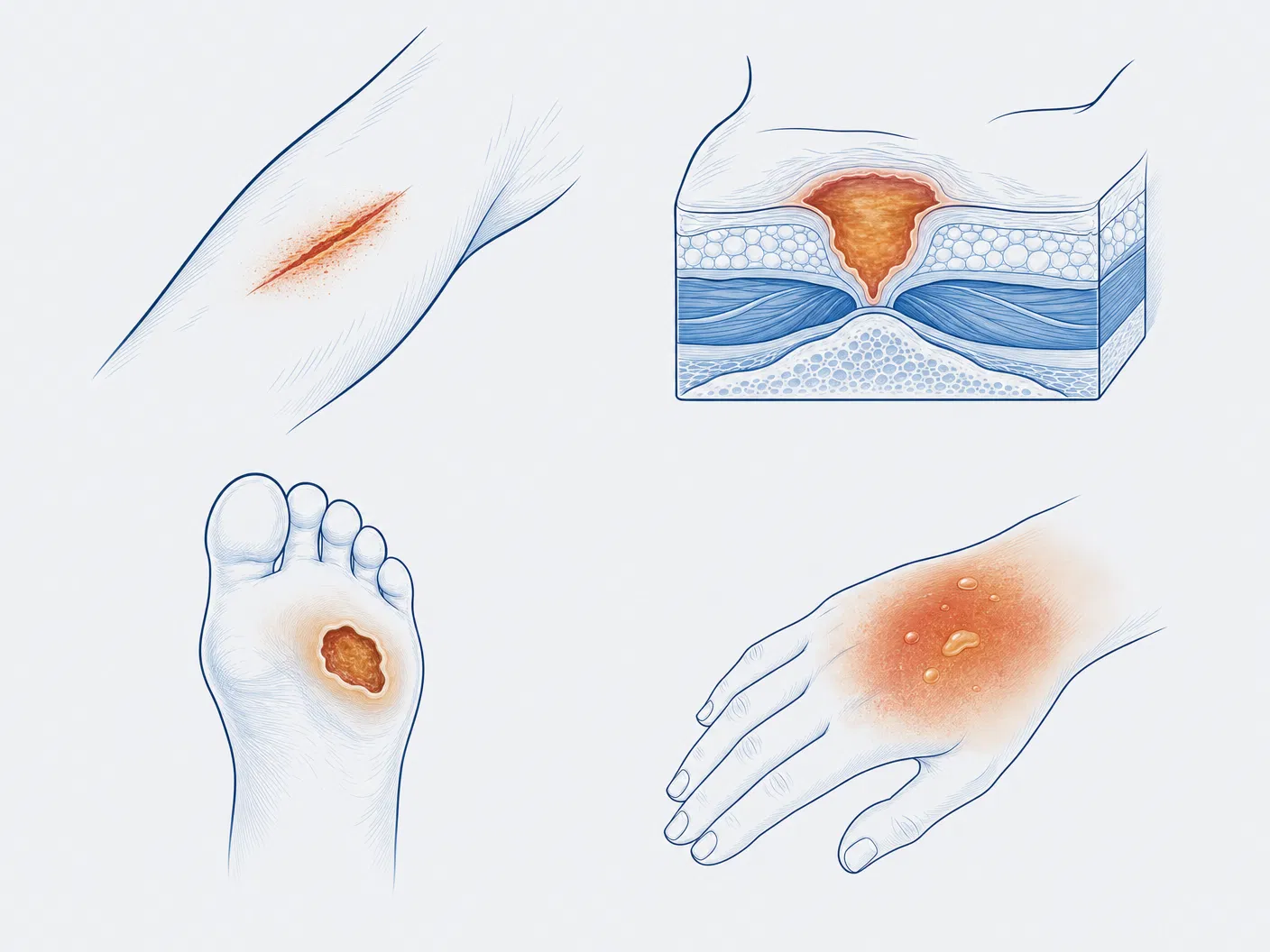
Diabetic foot ulcers affect 15–25% of people with diabetes. This population represents the largest single driver of hydrogel wound-care demand.
The majority of hydrogel wound dressings are available without a prescription, creating a large, reachable consumer audience for education and affiliate marketing.
Among all hydrogel applications, wound care stands apart for several converging reasons. First, the clinical evidence base is mature and well-established — hydrogel dressings have been used in clinical wound management since the 1970s, and their mechanism of action (moist wound healing) is universally accepted in evidence-based wound care guidelines.
Second, the consumer audience is large, motivated, and actively searching for solutions. Chronic wound patients — particularly those with diabetic ulcers, pressure injuries, and venous leg ulcers — represent a high-intent purchasing audience that is underserved by general health content platforms.
Third, the product landscape is diverse and continuously expanding. Standard amorphous gels, hydrogel sheets, silver-ion formulations, collagen-hydrogel hybrids, and antimicrobial variants create a rich ecosystem of products at multiple price points, suitable for affiliate marketing, sponsored content, and direct advertising partnerships.
Finally, wound care is one of the few medical product categories where consumers regularly make independent purchasing decisions without a prescription — making it uniquely accessible for an education-and-recommendation platform model.
03 — BUSINESS MODEL
How Hydrogels.ai
Creates Value
Education-First Authority
By providing clinically referenced, accurate educational content about hydrogel wound care, Hydrogels.ai builds trust with both consumers and healthcare professionals — the foundation for all monetization.
Affiliate Revenue
Product recommendations link to Amazon, Walmart, and specialist wound care retailers via affiliate programs. High-intent wound care searches convert at significantly above-average affiliate rates.
Advertiser Partnerships
Manufacturers of hydrogel wound care products — Smith+Nephew, Mölnlycke, Cardinal Health, Medline — represent a natural advertiser base for a platform with a verified wound-care audience.
Audience Data for Brands
Aggregated, anonymized data on wound type queries, product interest, and geographic distribution creates valuable market intelligence for wound care brands and distributors.
Advertiser & Partner Pitch
Hydrogels.ai is purpose-built to attract the wound care industry's most valuable audience: patients and caregivers actively researching wound treatment options. Unlike general health platforms, every visitor to Hydrogels.ai has declared a specific wound care intent — making the platform uniquely efficient for wound care product advertising.
TARGET AUDIENCE
Wound care patients, caregivers, home health aides, nurses
AD FORMATS
Sponsored product placements, category sponsorships, banner ads, email
PARTNER TYPES
Wound care manufacturers, distributors, pharmacies, telehealth platforms
04 — SAFETY & ETHICS
Our Commitment to
Safe, Honest Information
Not Medical Advice
All content on Hydrogels.ai is educational. We do not diagnose wounds, prescribe treatments, or replace the judgment of a qualified healthcare professional.
Red Flag Screening
Our wound guide includes mandatory safety checks that direct users with serious wound symptoms to seek professional care before viewing product recommendations.
Transparent Affiliates
Every page with affiliate links carries a clear disclosure. Product recommendations are based on clinical evidence and product quality, not commission rates.
Ready to Find Your Dressing?
Use our free wound guide to get tailored hydrogel product recommendations.